WE CAN HELP:
SEO Recovery After a
WordPress Redesign
Did your traffic or rankings drop after a website redesign? We help businesses diagnose and recover lost search visibility, from missing pages and broken redirects to technical WordPress issues. And unlike agencies that stop at an SEO audit, we can implement the fixes ourselves.
Wondering what recovery can look like? See what happened when a five-page redesign wiped out a client’s search visibility.



97%
Organic traffic crash in our Imhoff case study
~300/day
Organic visits restored within about a month
+75%
Tracked conversions versus the original site
SEO + WordPress
Diagnosis and hands-on implementation
The New Website Looks Better.
So Where Did Your Traffic Go?
A fresh design should not erase years of search visibility. But when a redesign removes ranking pages, changes URL paths, breaks backlinks, or leaves staging restrictions in place, a business can lose the customers who used to find it on Google.
We investigate what actually changed, prioritize the lost pages and search signals that mattered, and make the repairs directly. If the redesign is not the real cause, we will tell you that too. For a broader list of possible causes, see our website traffic-drop guide.
A REAL RECOVERY PROJECT
How a Five-Page Redesign Nearly Erased Imhoff’s SEO
An established Denver painting business had dozens of service pages, hundreds of blog posts, and years of backlinks. A replacement website compressed all that into roughly five pages. It looked cleaner. Search traffic collapsed.
The crash
The replacement site removed much of the original service-page and blog footprint. Old backlink destinations turned into 404 errors.
- 300+ organic visits/day fell to under 10
- Roughly 1,100 ranking keywords fell to about 130
- Top-three rankings fell from 25 to 2
What we restored
We recovered useful original content, rebuilt important URL paths, and added permanent redirects where pages needed new destinations.
- Valuable service pages and blog content
- Redirects and internal links
- Clearer pages, stronger proof and CTAs
What changed afterward
Search visibility returned, and the rebuilt site gave visitors better reasons to contact the company.
- Around 300 daily organic visits restored
- Semrush tracked 176 → 893 keywords, July to August 2024
- Tracked conversions +75% vs. original site
What changed visually, and what mattered underneath
These are real Imhoff project screenshots. The difference in layout is easy to see; the search damage was mostly invisible. A website redesign also has to protect useful URLs, content, links and search intent.
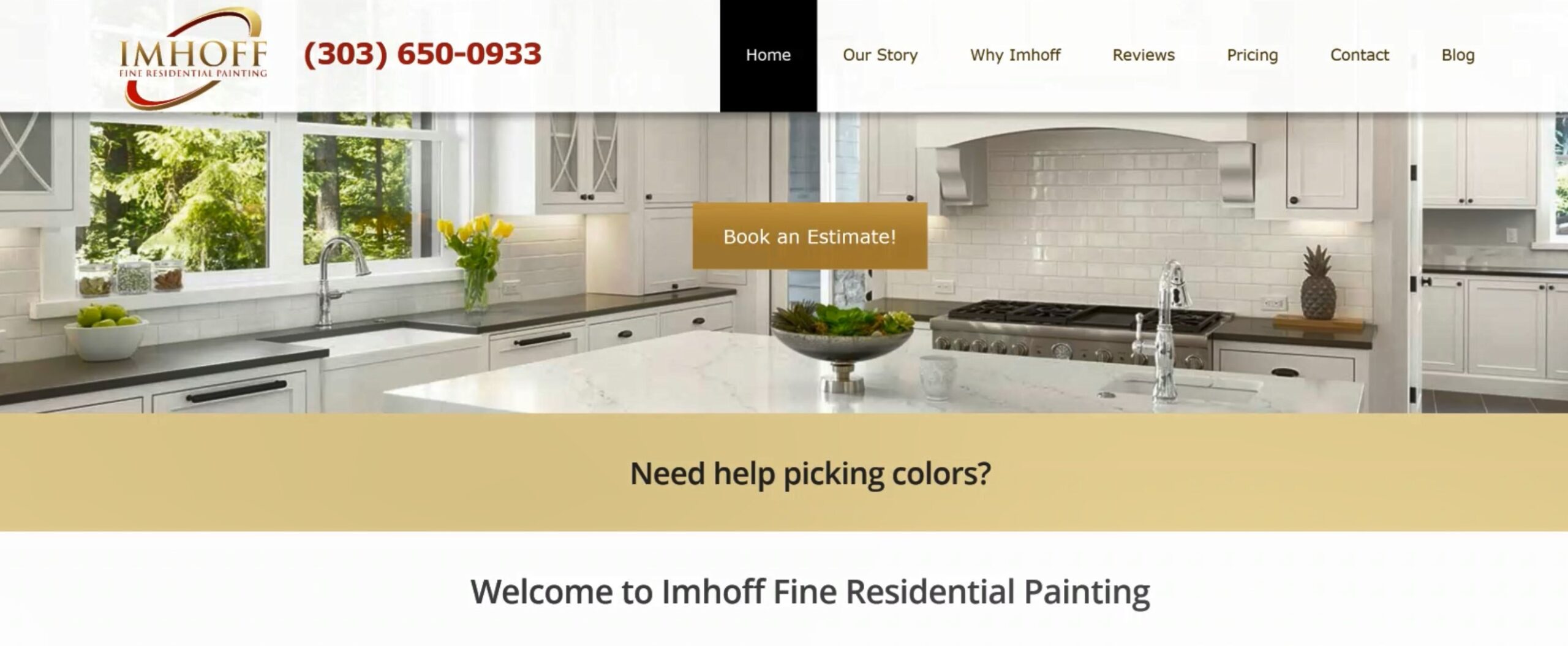
Earlier Imhoff website. Years of pages and links had accumulated search value beyond what you can see on a homepage screenshot.

Imhoff after the WordPress rebuild. The site combines service pathways, portfolio navigation and prominent contact options without throwing away useful search assets.
What the old website had earned
Before the failed redesign, Imhoff Fine Residential Painting was receiving more than 300 organic visits each day. Afterward, traffic fell below 10 per day. Its ranking footprint also collapsed as useful URLs and old link destinations disappeared.
After our WordPress rebuild launched in late July 2024, traffic returned to roughly 300 organic visits a day within about a month. We also improved the rebuilt site’s ability to convert: tracked conversions rose 75% compared with the original pre-crash website (GA4 conversion events, with spam submissions excluded).
Read the full Imhoff website redesign SEO recovery case study →
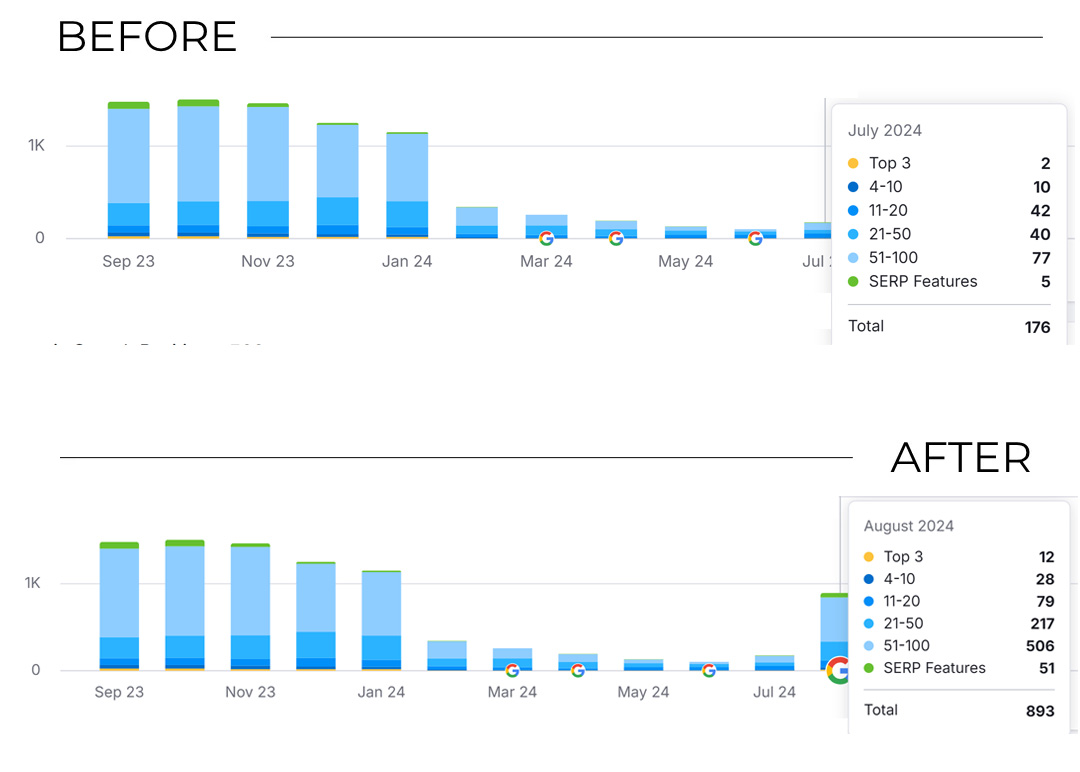
What the organic traffic trend looked like
The keyword recovery chart above shows the visibility rebound. This separate Ahrefs chart provides a historical view of the collapse after the earlier redesign and the change in direction following our July 2024 relaunch.
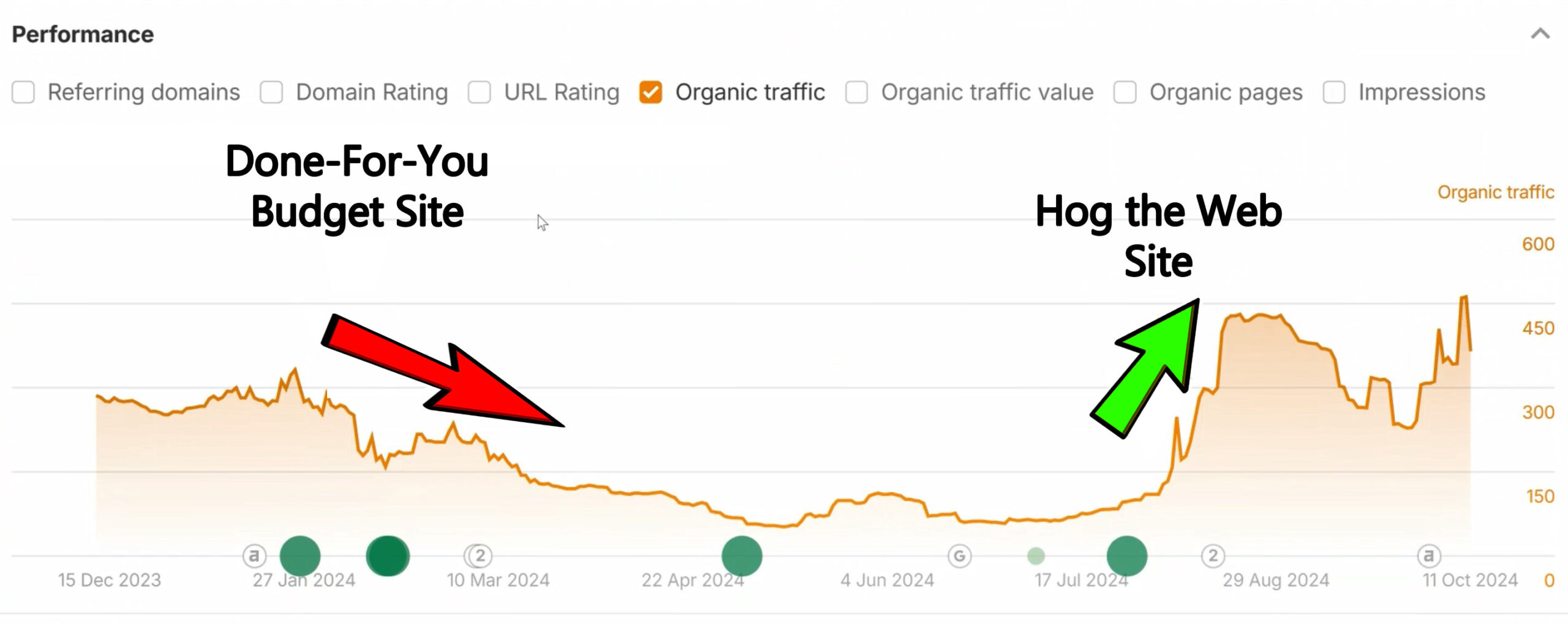
Source: Ahrefs estimated organic traffic, December 2023–October 2024. Ahrefs is a third-party estimate and is not an exact GA4 traffic count. Read the full recovery case study for measurement context.
Hear From Clients Who Trusted Us With Their Websites
Doug Imhoff describes what happened after we rebuilt his website. These are actual client videos, not invented reviews or scripted endorsements.
Imhoff Fine Residential Painting
“Look at what happened to my traffic when I went back to Hog the Web... Boom!”
DCAC Live
“They dug into our SEO ... and found issues we didn't even know we had.”
Applied Marketing Science
“I can't say enough good things about the Hog the Web team. They're flexible, communicative, and they offer great ideas and advice.”
The Leelanau School
“They feel less like a contractor and more like a partner who's genuinely invested in helping us”
The French Library
“We've been working with Hog the Web for the past five years and it's been a really good experience for us.”
Follow the Money
“We will be using Hog the Web for many many years to come, and we highly, highly recommend them for you as well.”
WHAT CAN BREAK
Four Ways a Redesign Can Damage Organic Search
We do not assume every traffic drop is a Google algorithm problem. A launch changes many moving parts at once. These are the first categories of losses we look for when the timing points to a redesign.
Valuable Pages and Topics Disappear
Service pages, blog articles or location pages that had earned rankings may be deleted or replaced by one brief catch-all page.
- Compare old and current URL inventories
- Identify pages that earned clicks or links
- Recover useful content, not low-value clutter
Old URLs and Backlinks Break
A beautiful new URL structure is little comfort when the old pages return 404s and external links lead nowhere. Google’s site-move guidance recommends mapping old URLs to the appropriate new ones and avoiding irrelevant homepage redirects.
- Map old URLs to genuinely relevant destinations
- Repair missing or incorrect 301s
- Avoid redirecting every old URL to the homepage
Pages Stop Being Indexed Properly
Staging noindex settings, incorrect canonicals, robots rules and sitemap errors can keep important pages out of search. Google explains how canonicalization determines which URL is shown for duplicate or very similar content.
- Check Google Search Console indexation
- Review robots, noindex and canonical signals
- Fix sitemap and HTTP status-code problems
Content Relevance and Site Structure Change
Removing important explanations, rewriting titles, burying internal links or introducing rendering problems can change how search engines understand a site.
- Compare old and new topical coverage
- Restore useful contextual internal links
- Inspect mobile rendering and performance
DIAGNOSIS BEFORE FIXES
What We Check Before We Touch Your WordPress Site
The first step is separating a redesign-related loss from a coincidental traffic decline. We look for evidence at the page and query level so the repair plan follows the damage, not somebody’s favorite SEO checklist. Google’s guide to debugging search traffic drops is a useful reference for distinguishing technical issues, changing search demand and other causes.
The Timeline and Baseline
We compare the launch date with Google Search Console clicks, impressions, queries and pages. Where available, GA4 helps us distinguish genuine traffic loss from tracking mistakes.
- Which pages lost non-branded search traffic?
- Did the drop begin at launch or earlier?
- Was a Google update or seasonal change involved?
The Old Site Versus the New
We use backups, prior sitemaps, crawl data and archived copies where available to reconstruct what existed before the redesign.
- Which important URLs no longer exist?
- Which old destinations earned backlinks?
- Which copy and headings disappeared?
Crawlability and Technical SEO
We crawl the current site and check how redirects, response codes, indexation rules, canonical tags, sitemaps and internal navigation actually behave.
- Does each important URL resolve correctly?
- Are wrong pages marked canonical or noindex?
- Can Google render the page content?
Repair Priority and Monitoring
We rank fixes by lost value and likely cause. A missing high-performing service page usually deserves attention before cosmetic metadata edits.
- Fix critical indexation/redirect faults first
- Restore valuable content and links
- Monitor recrawling, clicks and conversions
OUR APPROACH
Recover What Worked. Then Improve What Didn’t.
This is not a blind rollback to an unattractive old site. In the Imhoff project, the goal was to regain search visibility while delivering a better experience for visitors. That same principle guides how we approach the work.
01. Establish the loss
Review Search Console performance, launch timing, key landing pages and available historical data. We identify which losses are measurable and which causes remain uncertain.
02. Reconstruct the old footprint
Recover old URL lists, useful content, backlink destinations and internal-link structure where evidence exists. Not every deleted page needs to return.
03. Fix the underlying problems
Implement appropriate URL restoration, relevant redirects, content repairs, technical fixes and clearer visitor journeys in WordPress.
04. Verify and monitor
Recheck crawl behavior, indexing and search performance after changes. Some improvements show up after recrawling; others take longer or do not fully recover. If you also want to build new visibility after repairing the damage, see our ongoing WordPress SEO services.
The exact scope depends on access to the original site, what was removed, and the technical condition of the current WordPress installation. Recovery is never guaranteed.
RELATED FIRST-PARTY RESULTS
WordPress Development and SEO Belong on the Same Team
The Imhoff rescue is the closest match to this service. Other projects show why a redesign, technical SEO, content strategy and actual implementation work better together.
Direct redesign recovery
97%
Imhoff Fine Residential Painting
A prior redesign wiped out much of a content-rich site. We rebuilt valuable URLs and content, restored daily search traffic to roughly its earlier level and improved tracked conversions.
SEO-conscious redesign
+49.9%
Applied Marketing Science
After our 2026 redesign, homepage engagement rate rose 49.9% in the first 42 days while homepage Google impressions grew 46%. This was engagement growth, not a 49.9% lift in leads.
Technical SEO + content
+207%
Overwatch
Non-branded monthly organic clicks increased from 25 to 76 in a focused SEO project combining technical fixes, on-page work and high-intent content. This was not a redesign recovery.
Two other ways we measure better websites
A redesign should improve how visitors use a site. Technical and content SEO should bring new people to it. These are authentic images from two different HTW projects, not additional examples of redesign-traffic recovery.
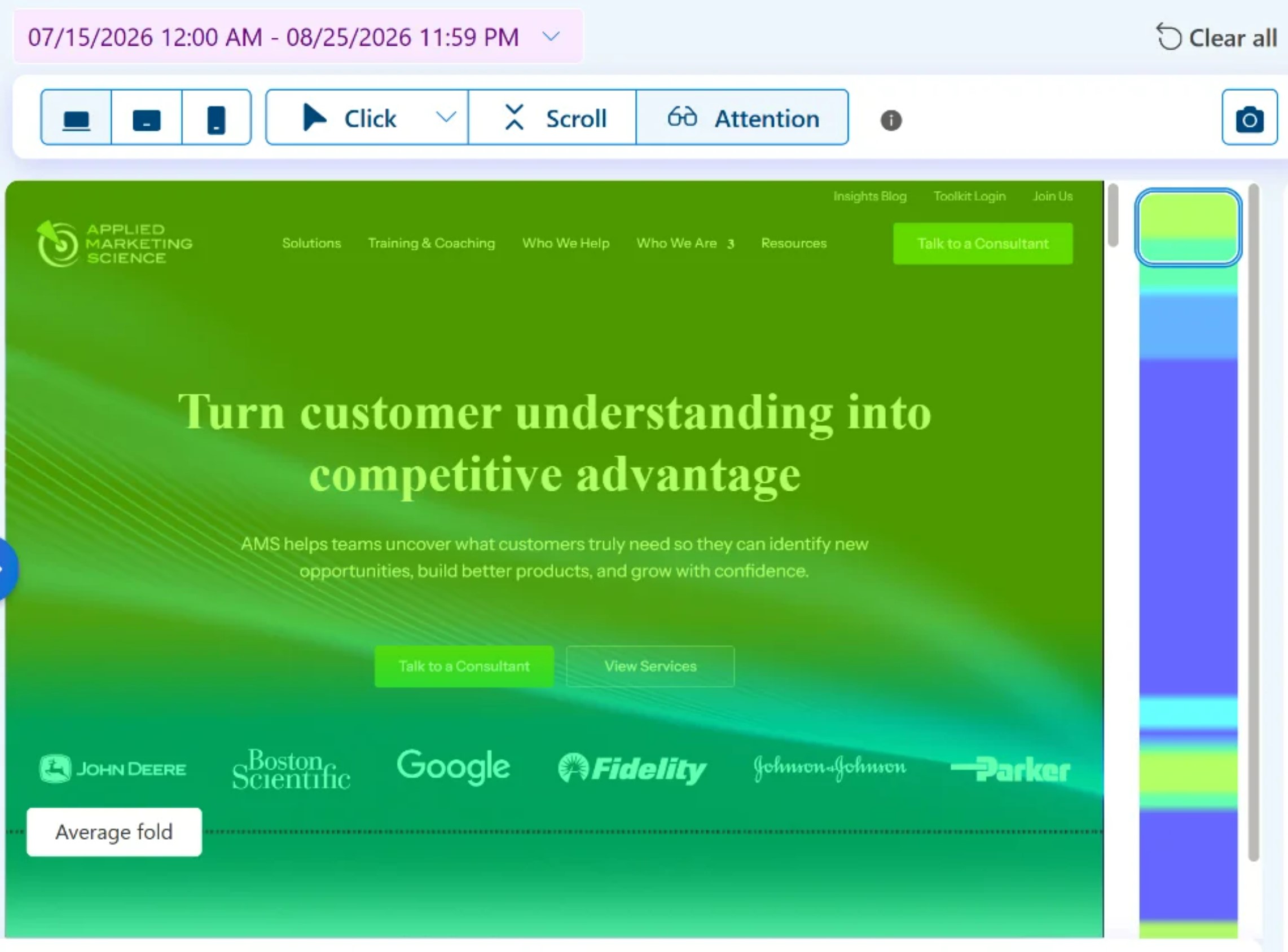
Applied Marketing Science: A Microsoft Clarity attention map of the redesigned homepage. The related case study measures engagement and deeper visitor attention; this image is not a conversion-rate report. Explore the redesign case study.
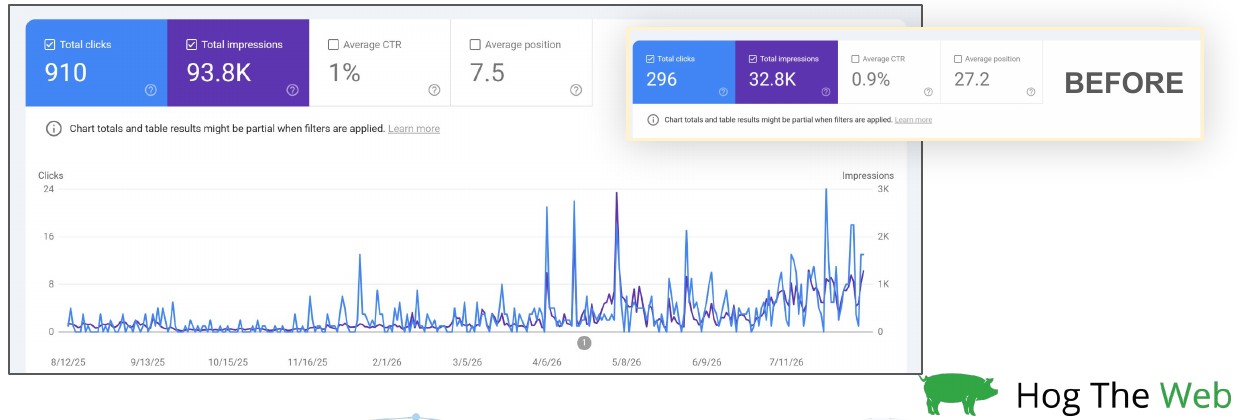
Overwatch: A Google Search Console comparison graphic from an SEO campaign. Its reported +207% gain is specifically monthly non-branded clicks; the screenshot summarizes a different reporting view. Explore the SEO case study.
Different clients, goals and measurement windows. These historical outcomes are not guarantees of future rankings, traffic or conversions.
PROJECT FIT & SCOPE
Do You Need a Repair Plan or a Complete Rebuild?
Not every traffic drop requires a new website. Sometimes the most valuable work is repairing a few high-impact URLs and indexation settings. Other projects involve restoring extensive page libraries or fixing deeper design and WordPress structure problems. If the current site itself needs rebuilding, we can also handle the WordPress web design and development work.
We evaluate the likely cause before recommending the scope. The cost depends on the number of affected pages, access to historical versions, redirect complexity, development work and what needs to be rebuilt. We will not quote a universal recovery timeframe or promise a specific ranking result.
Useful things to have ready
We Can Start With the Evidence
- The current website URL and approximate redesign launch date
- Access to Google Search Console and GA4, if available
- Old sitemap, site backup or previous URL list, if available
- Any screenshots showing the drop or historically important pages
- A short description of what the redesign changed
You do not need to collect all of this before getting in touch. We can help determine what evidence still exists.
FREQUENTLY ASKED QUESTIONS
WordPress Redesign SEO Recovery FAQs
Straight answers about lost rankings, deleted URLs, redirects, recovery timelines and what to expect from an investigation.
Can SEO rankings recover after a bad website redesign?
Often, yes. If valuable pages were removed, redirects were missed, or important content became unindexable, repairing those issues can help. How much returns and how quickly depends on the damage, current competition and Google’s recrawling. In our Imhoff case study, organic traffic returned to roughly 300 visits per day within about a month of our relaunch.
Why did my WordPress traffic drop right after launching a new site?
Common causes include deleted ranking pages, URLs changed without useful redirects, staging noindex settings, broken internal links, content removed during a redesign and technical rendering problems. A coincident Google update, seasonality or tracking change can also explain a drop, so we verify the timing before making assumptions.
What do you need to investigate the loss?
Start with your current URL and approximate redesign date. Google Search Console access, analytics, a backup or old sitemap, and examples of pages that previously ranked are useful. If the old website is gone, we can assess whether enough historical information is available to reconstruct valuable pages and URLs.
Can you restore accidentally deleted pages and blog content?
Sometimes. Backups, archived copies, old sitemaps and other available records can help reconstruct useful content. We prioritize pages that genuinely served visitors or earned organic search visibility, rather than automatically rebuilding every old URL.
Should every deleted URL redirect to the homepage?
No. An old URL with a relevant replacement normally deserves a permanent redirect to that matching page. Redirecting unrelated pages to the homepage can confuse visitors and may be treated as a soft 404. If content has no reasonable replacement, an appropriate not-found response may be the right choice. See Google’s redirect documentation for the distinction between permanent and temporary redirects.
Can you fix the SEO without redesigning the site again?
Often, yes. Redirects, indexing controls, links, on-page content and WordPress technical settings can frequently be repaired on the current design. We only recommend another rebuild when the underlying site cannot reasonably support the required fixes or business goals.
How long does SEO recovery take?
There is no fixed timeline. Some indexation or redirect issues can be addressed quickly, but Google still needs to recrawl and reassess affected URLs. A large amount of deleted content or a changed competitive landscape can take substantially longer. Imhoff’s roughly one-month rebound was one client result, not a standard promise.
What if the traffic drop was caused by a Google update, not the redesign?
We compare performance and launch timing with relevant update dates and other causes. If the evidence does not support a redesign-related problem, we explain what appears more likely and recommend the appropriate investigation instead of selling unnecessary migration repairs.
Do you guarantee our old Google rankings will come back?
No reputable agency can guarantee rankings. We can diagnose verifiable problems, implement repairs and measure the outcome. Google controls how pages are crawled, indexed and ranked, and other circumstances can affect recovery.
Is this different from a general WordPress SEO package?
Yes. This service starts with a known change event and the loss of previously earned search value. It emphasizes historical URL/content reconstruction, redirect and indexation repair, and post-launch validation. Our broader WordPress SEO services also cover ongoing optimization and growth.
Can you help if another agency completed the redesign?
Yes. We can review the current WordPress site, compare it with available historical evidence and recommend fixes whether we built the new site or not. Access and project scope are agreed on before implementation.
Your Rankings Dropped After the Redesign.
Let’s Find Out Why.
Tell us when the new site launched and what changed. We’ll help determine what happened to your search visibility, which fixes are worth pursuing, and whether we’re the right team to do the WordPress work.