If you want AI answers to recommend your brand, guessing at prompts won’t cut it. Prompt mining and AI visibility tools help uncover the questions and topics people are likely to ask AI systems, track how brands appear across those prompts, identify which sources are being cited, and reveal gaps your content can fill.
Here’s our short list and how to use each for AI Search Optimization and AEO (Answer Engine Optimization).
Key Takeaways
- Microsoft Clarity is our favorite AI visibility tool right now. We use its AI Visibility reports to monitor citations, Share of Authority, cited pages, grounding queries, competitors, and content opportunities. It gives us one of the clearest views of where our content is already earning authority and where we are missing from AI answers.
- Google Search Console gives us the best high-level view of which pages are actually appearing in Google’s generative AI features and how much visibility they are receiving. Its Generative AI performance report includes impressions from AI Overviews and AI Mode and lets us compare performance at the page level.
- Semrush is useful for combining traditional SEO data with AI visibility research. Its AI Visibility Toolkit includes prompt research, competitor analysis, brand monitoring, and tracking for specific commercial prompts.
- Peec AI focuses on brand visibility within AI search, including brand mentions, sentiment, source analysis, and competitor benchmarking.
- BrandRadar is geared toward larger organizations that need more extensive AI visibility, brand monitoring, and competitive analysis.
- Search Atlas combines traditional SEO with AI-powered automation, making it more relevant for teams looking for a broader SEO platform rather than a dedicated AI visibility tool.
- ChatGPT, while not a dedicated prompt tracking platform, is incredibly versatile for content ideation, query brainstorming, content analysis, and technical SEO assistance.
Which Prompt Mining Tool Is Right for You?
| Tool | Best For | AI Visibility / Citation Analysis | Prompt / Content Research |
| Microsoft Clarity | AI citations, Share of Authority, and content opportunities | Strong | Strong |
| Google Search Console | Measuring which pages appear in Google AI Overviews and AI Mode | Strong for Google | Limited |
| Semrush | Combining SEO, AI competitor research, and prompt tracking | Strong | Strong |
| Peec AI | Brand monitoring and AI mentions | Strong | Moderate |
| BrandRadar | Enterprise AI visibility tracking | Strong | Moderate |
| Search Atlas | Combining traditional SEO with AI automation | Moderate | Moderate |
| ChatGPT | Prompt brainstorming, research, and content creation | Limited | Manual |
If you’re just getting started with AI visibility, Microsoft Clarity and Google Search Console are the first places we recommend looking, especially because they can provide useful data without requiring another expensive SEO platform. We primarily use Clarity for Share of Authority, citation analysis, and finding content opportunities, while Search Console gives us a broader view of which pages are appearing in Google’s AI features and how frequently. Semrush is useful when we want to add competitor research and controlled prompt tracking to the mix.
1. Microsoft Clarity
Microsoft Clarity has become our favorite tool for monitoring AI visibility because it gives us a useful combination of real citation data, competitive context, cited-page reporting, and content opportunities.
The Microsoft Clarity AI Visibility dashboard shows when pages from your website are being used as sources in supported AI-generated experiences. Instead of only looking at referral clicks, it helps us understand whether our content is actually contributing to AI answers.
One of the metrics we watch most closely is Share of Authority. This compares the citations attributed to our domain with citations from other domains appearing in overlapping grounding queries. We find this especially useful for identifying topics where Hog the Web already has strong authority and topics where competitors are being cited more frequently.
Clarity also shows which pages are being cited and the grounding queries associated with those citations. Its Query Topics feature groups related citation queries into broader themes, which makes it much easier to identify which subjects are actually driving AI visibility.
More recently, Clarity added Topic Insights, which allows us to create our own topics and representative prompts. We use this for important commercial questions where we specifically want to know whether Hog the Web is being cited or recommended compared with competing companies.
Here are the Clarity features we find most useful:
- Page Citations: See which URLs from your website are being referenced and how often.
- Share of Authority: Compare your share of citations with other domains appearing within the same grounding-query sets.
- Grounding Queries: See the retrieval queries AI systems use when finding and evaluating content.
- Query Topics: Group citation activity into broader themes to understand where your site is earning authority.
- Topic Insights: Track important topics and representative prompts, compare competitors, and identify content gaps.
- AI Referral Traffic: Compare AI-referred traffic with overall website traffic.
At Hog the Web, Clarity has been particularly helpful for turning AI visibility into actual content decisions. For example, rather than simply seeing that a page is getting AI citations, we can see the broader topic behind those citations, compare our authority with other domains, and identify related commercial topics where we’re not appearing yet.
That makes Clarity less like a traditional rank tracker and more like a new layer of SEO research.
We primarily use Microsoft Clarity to answer two questions: “What subjects do AI systems already trust us on?” and “Where are competitors being cited when we aren’t?” Those insights give us concrete ideas for what to update, what to create, and where to build more authority.
2. Google Search Console Generative AI Performance
Google Search Console is not a traditional prompt mining platform, but its Generative AI performance reporting has quickly become one of the most useful tools we have for understanding visibility inside Google’s AI-driven search experiences.
Google’s Generative AI performance report includes visibility from AI Overviews and AI Mode. Instead of estimating how often a page might be cited, it reports impressions when links from your website actually appear within supported generative AI features in Google Search.
For us, that makes Search Console particularly valuable for understanding the page-level scale of AI visibility.
We can see:
- Total Generative AI Impressions: How frequently pages from the website appeared in Google’s generative AI features.
- Pages: Which URLs are generating the most or least AI visibility.
- Performance Over Time: Whether generative AI impressions are increasing or declining.
- Country and Device Data: Where and how users are encountering those AI-generated results.
We tend to use Google Search Console and Microsoft Clarity together because they answer different questions.
Clarity gives us more context around citations, authority, competitors, and content opportunities.
Search Console gives us a better overall sense of which pages are appearing in Google’s generative AI search features and how much exposure those pages are receiving.
Search Console does not give us the same competitive Share of Authority view that Clarity does, and it is not designed to tell us every prompt responsible for an AI appearance. But it provides valuable first-party Google performance data that complements the more exploratory information we get from Clarity.
For AI SEO measurement, we don’t rely on a single dashboard. Clarity helps explain where our authority is coming from, while Google Search Console helps show which pages are earning visibility at scale within Google’s AI search experiences.
3. Semrush AI Visibility Toolkit
We already use Semrush for traditional SEO research, so its AI Visibility tools provide a useful way to connect the newer AI-search landscape with more familiar keyword, competitor, and search-performance data.
The Semrush AI Visibility Toolkit includes tools for monitoring how brands appear in AI-generated answers, researching prompts, comparing competitors, and tracking specific prompts over time.
Some of the most useful features include:
- Prompt Research: Discover AI-search topics and prompts worth targeting, similar to keyword research for traditional SEO.
- Competitor Research: Identify topics and prompts where competitors are appearing but your brand is not.
- Prompt Tracking: Monitor selected high-value prompts over time to see whether your visibility changes.
- Brand Performance: Compare brand visibility, Share of Voice, sentiment, and positioning against competitors.
- AI Search Site Audit: Identify technical issues that may make it harder for AI crawlers to access your website.
We don’t rely on Semrush as heavily as Microsoft Clarity for our day-to-day AI visibility analysis, but it is useful when we want to combine AI research with the traditional SEO data and competitor analysis we already use inside Semrush.
Prompt Tracking is especially useful for important commercial questions. Instead of waiting to discover what prompts happen to generate citations, we can choose specific prompts we care about and monitor whether our brand starts appearing over time.
That makes it a useful bridge between traditional rank tracking and AI search visibility.
4. Peec AI

Peec AI is designed to help you see where your brand shows up, or doesn’t show up, in AI-generated answers. Think about it: if someone asks a question related to your business on a platform like ChatGPT or Perplexity, does your company get mentioned? And if it does, is it in a good light?
The platform focuses heavily on monitoring brand visibility across different AI platforms. This can help businesses understand not only whether their brand is appearing, but also how it compares with competitors and which sources are influencing AI-generated answers.
The sentiment analysis feature is particularly useful for companies that want to understand their brand’s reputation in the AI space. It doesn’t just tell you if your brand is mentioned; it helps analyze how it’s being talked about.
Here’s a quick look at some of its useful features:
- Brand Tracking: Monitor your brand’s presence across various AI search engines.
- Sentiment Analysis: Understand the tone and context of AI responses that mention your brand.
- Competitor Benchmarking: See how your brand stacks up against competitors in AI search results.
- Source Attribution: Identify which sources AI platforms use when referencing your industry or brand.
Peec AI is focused on a different question than traditional rank tracking: not simply “Where does my website rank?” but “How is my brand represented when AI systems answer questions about this market?”
While Peec AI is useful for monitoring AI search visibility, it’s important to remember it’s not a replacement for traditional SEO tools. You’ll still need those for broader search engine optimization tasks. However, for anyone focused on how their brand is represented in AI conversations, Peec AI is worth considering. You can find more information on various AI monitoring tools, including Peec AI, in articles discussing top AI monitoring tools.
5. BrandRadar
BrandRadar is positioned as a more enterprise-level AI visibility solution. If you’re managing a larger brand or working with a team that needs to keep a close eye on how your company is being talked about across various AI platforms, this type of platform may be useful.
One of BrandRadar’s core ideas is testing and monitoring a broad range of prompts so businesses can see how different AI platforms respond. This provides a clearer picture of how a brand is being represented and where there may be gaps or inaccuracies.
BrandRadar also focuses on areas such as multilingual monitoring, sentiment and narrative analysis, citation mapping, and enterprise reporting. These features are particularly relevant for larger brands that need to understand how their company is represented across markets or languages.
Citation mapping can also help marketers understand which sources AI platforms rely on when generating answers about an industry or its competitors. Knowing this can inform off-page SEO, digital PR, content development, and authority-building efforts.
For larger organizations, enterprise reporting and alerts can make it easier to monitor shifts in AI visibility without manually checking large numbers of prompts.
Here’s a quick look at some of its key strengths:
- Prompt monitoring: Tests how AI platforms respond to a wide range of relevant queries.
- Multilingual analysis: Helps monitor brand sentiment and narratives across different languages.
- Citation mapping: Identifies sources AI models use, helping inform content and authority strategy.
- Enterprise reporting: Provides more detailed monitoring for larger organizations.
The complexity and cost of enterprise AI visibility platforms mean they will usually make the most sense for established businesses or teams that need to monitor many markets, competitors, topics, or prompts at scale.
While it’s not a direct replacement for traditional SEO tools, BrandRadar fills a different role by focusing specifically on how brands are represented in AI-generated answers.
6. Search Atlas
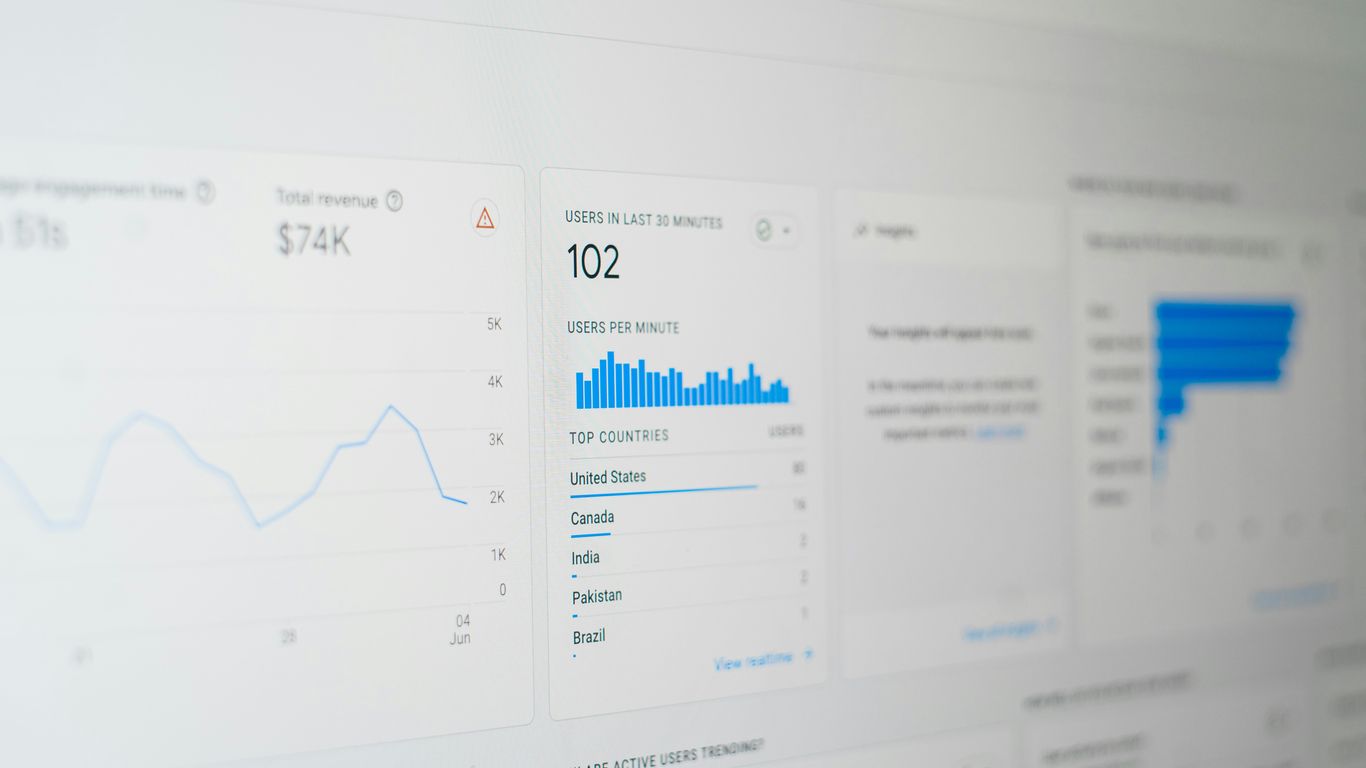
Search Atlas is positioned as an all-in-one SEO platform with a strong emphasis on AI-powered automation. It is less of a dedicated prompt-mining platform than tools such as Microsoft Clarity or Peec AI, but it can be useful for businesses that want AI-driven assistance across a much broader SEO workflow.
One of its standout features is the OTTO AI agent, which is designed to automate and assist with SEO tasks such as audits, technical recommendations, and content optimization.
Search Atlas covers a lot of ground, including keyword research, content optimization, link building, technical SEO, and WordPress integration. This makes it more relevant for teams that are looking for a broader SEO platform rather than a tool focused exclusively on monitoring AI citations.
Search Atlas can be particularly relevant for teams that manage multiple clients or businesses that need to scale SEO workflows.
Here’s a quick look at some of its useful features:
- OTTO AI Agent: Automates and assists with a variety of SEO tasks.
- WordPress Plugin: Simplifies content optimization and publishing.
- Domain Power Metric: Helps analyze website authority.
- Full-Funnel Capabilities: Covers keyword research, content, and technical SEO.
While it’s a powerful platform, the large number of features may be more than someone needs if their only goal is AI citation or prompt tracking. It makes more sense as a broader SEO system with AI functionality layered into it. You can learn more from this Search Atlas review.
7. ChatGPT
When we talk about AI tools for search optimization, it feels a bit strange to include something as general as ChatGPT. It’s not a specialized tracking tool like the others we’ve covered, but honestly, we use it all the time for our SEO and AEO work. It’s just so versatile. Think of it as the Swiss Army knife of AI assistants.
We also use it a lot for keyword research and topic ideation, especially for finding long-tail variations and related questions. You can give it a main keyword, ask for variations, and get ideas you might not have considered otherwise. It’s not always perfect, and we usually run important outputs through more specialized SEO tools to double-check, but it’s a useful starting point for ideation.
Beyond content ideas and basic keyword research, ChatGPT can also help with troubleshooting technical SEO issues. If we’re stuck on something, we can describe the problem and often get useful suggestions or explanations. We’ve also found it helpful for thinking through how AI systems interpret information, which is useful for AEO.
One of the most important things we’ve learned is the need for clear, declarative statements when structuring content for AI. Instead of burying the answer inside several paragraphs, we try to directly answer important questions and then provide supporting detail, evidence, examples, and sources.
Here’s a quick rundown of how we use ChatGPT for our SEO and AEO efforts:
- Content Ideation: Generating blog post ideas, subtopics, questions, and content angles.
- Keyword & Topic Research: Brainstorming long-tail keywords and semantic variations that we can validate with SEO data.
- Meta Descriptions & Titles: Helping draft and compare possible titles and descriptions.
- Technical SEO Assistance: Getting explanations and potential solutions for technical issues.
- Content Analysis: Reviewing whether a page directly answers important questions and identifying missing subtopics.
We’ve found that structuring content with clear headings, direct answers, short paragraphs, supporting evidence, and useful lists makes the information easier for both people and AI systems to understand.
While ChatGPT is an excellent starting point for prompt brainstorming, content ideation, and understanding how AI systems process information, it does not give you a complete dataset of the private questions real users are typing into AI platforms. Dedicated AI visibility tools provide much deeper information about tracked prompts, citations, competitors, and how your content is actually appearing in AI-generated answers.
For solo entrepreneurs, small businesses, and content creators, ChatGPT remains one of the most accessible and versatile tools available. It may not replace specialized AEO platforms, but it can be a valuable part of a broader SEO and AI-search workflow.
Want to see how it can help you create amazing content? Try our free website cost calculator to get started.
Wrapping Up Our AEO Tool Exploration
AI visibility tools are becoming an increasingly useful addition to traditional SEO research. As more people use ChatGPT, Google AI Overviews, AI Mode, and other AI-driven experiences, there are now additional questions to answer beyond simply “Where does my page rank in Google?”
We want to know which pages AI systems are using, what subjects our website is considered authoritative about, which competitors are being cited instead of us, and which commercial questions our brand is missing from entirely.
For Hog the Web, Microsoft Clarity is currently our favorite tool for citation analysis, Share of Authority, and finding content opportunities. Google Search Console gives us a stronger overall view of which pages are appearing within Google’s generative AI features and how much exposure they are receiving. We also use Semrush to supplement that data with traditional SEO research, competitor analysis, and prompt tracking.
None of these datasets should be treated as a perfect measurement of the entire AI-search market. Different tools measure different platforms and use different methodologies. The real value comes from establishing a baseline, tracking the same metrics over time, comparing multiple sources of data, and then using those insights to improve the website.
Do Prompt Mining Tools Improve AI Search Visibility by Themselves?
No. Prompt mining and AI visibility tools can show you what questions matter, where competitors are being mentioned, and which sources AI systems rely on, but the tools themselves do not make your website more visible.
Improving AI search visibility usually requires acting on that data: creating or improving useful content, strengthening topical authority, fixing technical SEO issues, earning credible third-party mentions and backlinks, improving internal linking, and making your brand and expertise easier for search and AI systems to understand.
In practice, we use AI citation and visibility data as another layer of SEO research. Microsoft Clarity helps us identify topics where our content is already earning citations, compare Share of Authority with other sources, and uncover commercial topics where competitors are appearing but we are not. Google Search Console helps us see which pages are receiving exposure in Google’s generative AI features, while tools such as Semrush can add competitor and prompt-tracking data.
We can then prioritize the content, on-page optimization, technical improvements, internal links, and authority-building work most likely to close those gaps.
That broader process is part of our WordPress SEO and AI search optimization services.
How We Use Prompt Mining for AI Search Optimization
Prompt mining isn’t just about finding interesting questions—it’s about understanding how people interact with AI search engines and where opportunities exist to improve visibility.
Our process combines several types of data rather than relying on a single AI visibility score. We use Microsoft Clarity to analyze AI citations, grounding queries, Share of Authority, cited pages, Query Topics, competitors, and content opportunities. For important commercial subjects, we can also track representative prompts and see whether Hog the Web is being cited compared with competing sources.
We use Google Search Console’s Generative AI performance reporting to understand which pages are receiving impressions in Google AI Overviews and AI Mode and how that visibility changes over time.
We also use Semrush data where useful to connect these AI-search insights with more traditional keyword research, competitor analysis, rankings, and controlled prompt tracking.
From there, we build or update content to directly address important questions, strengthen internal linking and topical authority, improve technical and on-page SEO, and make important information easier for both search engines and AI systems to understand.
The goal isn’t just to rank in traditional search results—it’s to become one of the sources AI platforms reference and one of the businesses they consider when users ask commercial questions.
For businesses that want help turning prompt and citation data into an actual search strategy, our WordPress SEO services combine traditional SEO with AI search optimization, including content improvements, technical SEO, authority building, schema, and visibility monitoring across Google and AI search.
Frequently Asked Questions
What exactly is prompt mining for AI search?
Prompt mining is the process of identifying the questions, topics, and conversational searches people are likely to use with AI systems and analyzing how AI platforms respond to them. Depending on the tool, this may involve tracked or simulated prompts, real grounding queries, citation data, Google AI impressions, or large datasets used to estimate which questions are important.
It does not mean marketers have access to a complete database of everything users privately type into ChatGPT or another AI assistant.
Why is this important for our website?
Search is changing fast. AI systems increasingly answer questions directly while also citing or recommending sources. If your website is not being used in those answers, people may encounter competitors before they ever reach a traditional Google result.
Tracking AI visibility helps us understand where a brand already has authority and where better content or stronger external authority may be needed.
How do these prompt mining tools help us?
Different tools answer different questions.
Microsoft Clarity helps us see grounding queries, citations, cited pages, Share of Authority, competitors, and content opportunities. Google Search Console shows which pages are appearing within Google’s generative AI features and how many impressions they are earning. Semrush can supplement that with prompt research, competitor analysis, and tracking for specific prompts.
Together, this gives us a more complete picture than simply guessing what users may be asking.
Can you give an example of how these tools help?
Yes. We use Microsoft Clarity to see which Hog the Web pages are already earning AI citations and which topics account for that authority. We can then compare those results with competitors and identify commercially important topics where Hog the Web is not being cited.
For example, if an informational article is receiving a large number of citations for a WordPress SEO-related topic but our actual WordPress SEO service page is not appearing in commercial AI answers, that creates a clear strategy: strengthen the relationship between those pages, improve the service-page content, and create supporting content that answers the commercial questions AI systems are already responding to.
Google Search Console then gives us another way to watch whether specific pages are gaining or losing impressions within Google’s AI Overviews and AI Mode.
Which tools are the best for this?
For our own work, we currently prefer Microsoft Clarity for Share of Authority, citation analysis, competitors, and content ideas. We use Google Search Console to understand which pages are receiving visibility within Google’s generative AI search features and how much exposure they are getting.
We also use Semrush for some AI visibility and prompt-tracking work alongside our traditional SEO research.
Tools such as Peec AI, BrandRadar, and Search Atlas may make sense for businesses with different needs, while ChatGPT is useful for manual research, brainstorming, and content analysis.
Is this different from regular SEO?
Yes, but there is a lot of overlap. Traditional SEO focuses heavily on visibility and traffic from search engine results, while AI search optimization also looks at whether your content is being used as a source and whether your brand is being mentioned or recommended inside AI-generated answers.
Strong traditional SEO fundamentals—useful content, technical accessibility, topical depth, links, authority, clear site structure, and trusted third-party mentions—also support AI visibility. The two strategies work best together rather than as completely separate disciplines.
How do we start using these tools?
Start with the data you already have access to.
If your website uses Microsoft Clarity, enable its AI Visibility and Citations features and look at which pages and topics are already earning citations. If your Google Search Console property has access to the Generative AI performance report, review which URLs are receiving impressions from AI Overviews and AI Mode.
Then identify a small set of commercially important prompts that you want your brand to appear for and monitor them consistently over time. Tools such as Clarity Topic Insights or Semrush Prompt Tracking can help with this.
From there, use the gaps you discover to guide content creation, on-page improvements, internal linking, digital PR, backlinks, and other SEO work.
Will this replace traditional SEO?
Not at all. Traditional SEO is still very important. A strong website foundation makes it easier for search engines and AI systems to discover, understand, trust, and retrieve your content.
We view AI visibility as another layer of modern SEO rather than an entirely separate replacement for it. By combining traditional search data with citation analysis, generative AI visibility, and prompt tracking, we can optimize for both the way people search today and the way search is evolving.